
Social media has become one of the most powerful platforms for individuals, businesses, creators, and organizations to connect with audiences worldwide. A proper understanding of social media promotion for beginners can help people increase online visibility, build relationships, attract potential customers, and grow their digital presence.
However, simply creating social media accounts and posting randomly is not enough to achieve meaningful results. Successful social media promotion requires a clear strategy, valuable content, audience understanding, consistency, and continuous improvement. Beginners who learn the basics of social media marketing can create stronger connections and reach more people online.
Understand the Basics of Social Media Promotion
Social media promotion refers to the process of using social platforms to share content, promote products or services, increase brand awareness, and communicate with audiences. It involves creating engaging posts, videos, images, and other forms of content that encourage people to interact and share.
For beginners, the main goal of social media promotion should not only be gaining followers but also building genuine relationships with the audience. A strong online presence develops when people find content useful, informative, entertaining, or valuable.
Different social platforms attract different types of audiences. Some platforms focus more on visual content, while others are popular for professional networking, short videos, discussions, or community engagement. Understanding these differences helps beginners choose the right platform for their goals.
Define Your Target Audience
Knowing your audience is one of the most important steps in social media promotion. Without understanding who you want to reach, creating effective content becomes difficult.
A target audience includes people who are most likely to be interested in your content, products, services, or ideas. Beginners should consider factors such as age group, interests, problems, preferences, and online behavior.
For example, educational content may attract students and professionals looking for knowledge, while lifestyle content may appeal to people interested in health, travel, fashion, or personal development.
When you understand your audience, you can create content that answers their questions, solves their problems, and encourages them to engage.
Choose the Right Social Media Platforms
Not every social media platform is suitable for every goal. Beginners often make the mistake of trying to manage multiple platforms without understanding where their audience spends time.
Choosing the right platforms allows you to focus your efforts and create better-quality content. If your audience prefers visual content, image and video-focused platforms may provide better opportunities. For professional audiences, business-focused networks may be more effective.
It is better to build a strong presence on a few suitable platforms rather than maintaining several accounts with inconsistent activity.
Create Valuable and Engaging Content
Content is the foundation of successful social media promotion. People follow accounts that provide value, entertainment, information, or inspiration.
Beginners should focus on creating content that connects with audience needs. Educational posts, helpful tips, behind-the-scenes content, industry updates, customer experiences, and creative videos can encourage engagement.
Quality is more important than simply posting frequently. Content should be clear, visually appealing, and easy for audiences to understand. Using attractive images, meaningful captions, and relevant information can improve audience interaction.
A good content strategy usually includes a mix of informative, entertaining, and promotional content. Constantly promoting products or services without providing value may reduce audience interest.
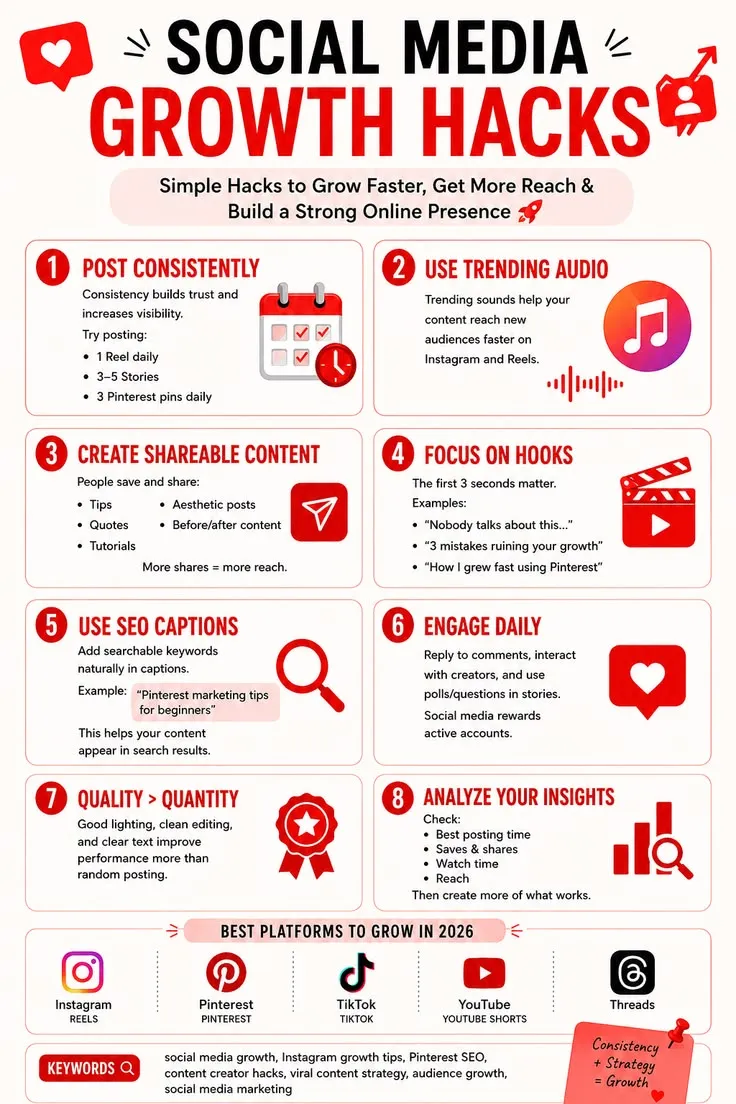
Maintain Consistency in Posting
Consistency plays an important role in social media growth. Posting regularly helps maintain audience attention and improves visibility.
However, consistency does not mean posting without planning. Beginners should create a content schedule that includes different types of posts and important topics.
A content calendar can help organize ideas, plan campaigns, and maintain regular activity. It also prevents last-minute content creation and improves overall quality.
Regular interaction with followers through comments, messages, and discussions also strengthens relationships and builds trust.
Use Visual Content Effectively
Visual content has become an important part of online communication. Images, videos, infographics, and short-form videos often attract higher engagement because they are easier for people to consume.
Beginners can improve their social media presence by focusing on clear designs, attractive visuals, and engaging video formats. Short videos, tutorials, demonstrations, and storytelling content can help capture audience attention.
Visual content should support the message rather than only focusing on appearance. A strong combination of useful information and appealing presentation creates better results.
Encourage Audience Engagement
Social media is based on communication and interaction. Successful promotion is not only about publishing content but also about building conversations.
Responding to comments, answering questions, asking for opinions, and encouraging discussions make audiences feel connected. Active engagement shows that there are real people behind the account.
Polls, questions, community discussions, and interactive content can increase participation and help understand audience preferences.
Building a loyal community takes time, but meaningful engagement creates stronger long-term growth compared to focusing only on follower numbers.
Use Hashtags and Keywords Strategically
Hashtags and keywords help improve content discoverability on many social platforms. When used properly, they can help users find content related to their interests.
Beginners should avoid using too many unrelated hashtags. Instead, they should focus on relevant terms that match their content and audience.
Using specific and meaningful keywords in captions, descriptions, and profiles can also improve visibility and make content easier to discover.
Analyze Performance and Improve Strategy
Successful social media promotion requires regular evaluation. Beginners should monitor how their content performs and identify what works best.
Important performance indicators may include engagement, reach, views, clicks, audience growth, and interactions. Understanding these results helps improve future content strategies.
If certain types of posts receive better responses, creators can focus more on similar content. Continuous learning and improvement are essential because social media trends and audience preferences change regularly.
Build Trust Through Authenticity
Authenticity is one of the strongest factors in social media success. People connect more easily with genuine content and real experiences.
Beginners should avoid copying others completely and focus on developing their own unique style. Sharing honest information, showing real processes, and communicating naturally can help create stronger audience relationships.
Trust develops when audiences consistently receive valuable and reliable content.
Avoid Common Social Media Promotion Mistakes
Many beginners struggle because they focus only on quick results. Expecting thousands of followers immediately can lead to frustration.
Other common mistakes include posting without a strategy, ignoring audience feedback, sharing low-quality content, and focusing only on self-promotion.
Successful social media growth requires patience, experimentation, and continuous effort. Building an online community is a long-term process rather than an overnight achievement.
Conclusion
Social media promotion provides powerful opportunities for beginners to increase online visibility and connect with more people. By understanding the audience, selecting the right platforms, creating valuable content, maintaining consistency, and engaging with followers, anyone can improve their digital presence.
A successful social media strategy is built on creativity, trust, and continuous improvement. Beginners who focus on providing value instead of only chasing numbers can create meaningful connections and achieve sustainable growth online.
With proper planning and dedication, social media can become an effective tool for personal branding, business development, and reaching a wider audience.