
A credit score is a three-digit number that summarizes how reliably a person has managed borrowed money. Lenders, landlords, and sometimes employers use it to assess risk. For beginners, improving a credit score can feel confusing, yet the process rests on a handful of consistent, proven habits. Understanding what influences the score and following clear steps produces steady progress over time.
How Credit Scores Are Determined
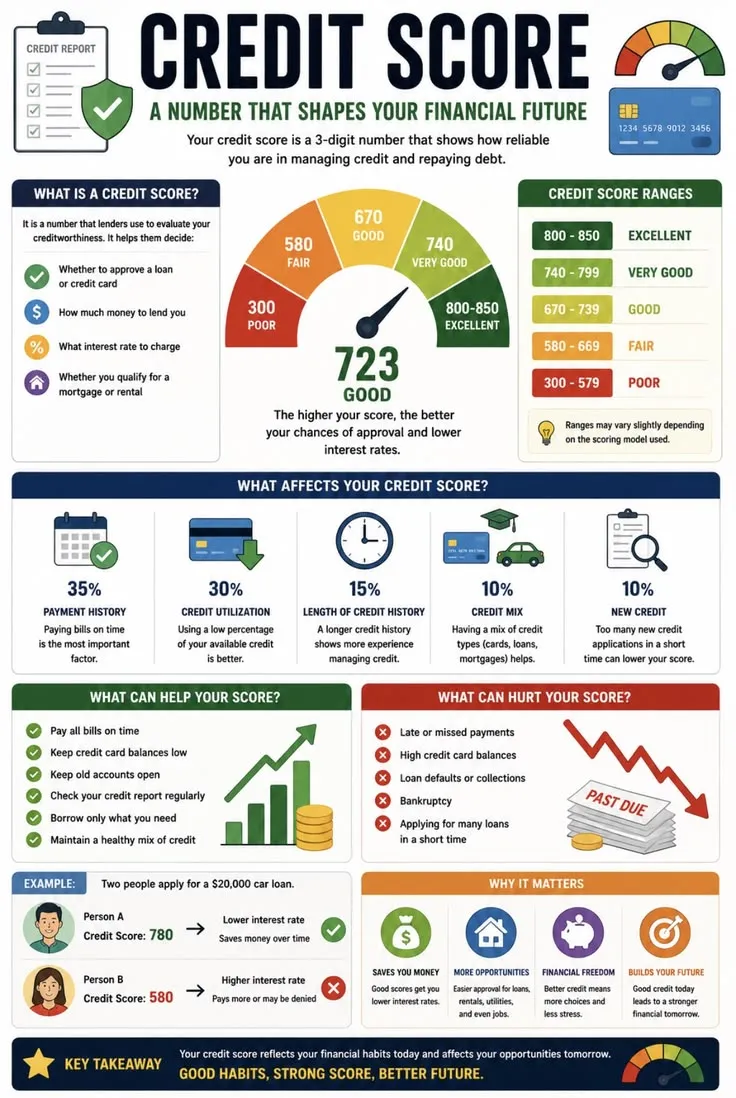
Most widely used scores, such as those from FICO, evaluate information in credit reports and group it into five main categories. Payment history carries the greatest weight, typically around 35 percent. It reflects whether bills and loan payments have been made on time. Amounts owed, including credit utilization, account for roughly 30 percent. This measures how much of available revolving credit is being used. Length of credit history contributes about 15 percent, new credit about 10 percent, and the mix of credit types another 10 percent.
Scores generally range from 300 to 850. Higher numbers indicate lower risk to lenders. Because the largest factors are payment history and amounts owed, focusing on those areas produces the strongest results for most people.
Step 1: Obtain and Review Credit Reports
The foundation of improvement is accurate information. Individuals are entitled to free credit reports from the major nationwide credit bureaus. Review each report carefully for errors such as accounts that do not belong to you, incorrect late payments, or outdated negative items. Disputing genuine errors with the credit bureaus and the creditor can remove inaccurate negative information and improve the score. Regular monitoring also helps catch problems early.
Step 2: Make Every Payment on Time
Payment history is the single most influential factor. Consistently paying credit cards, loans, and other reported bills by the due date builds a positive record. Even one missed payment can lower a score, and the effect is greater when payments are 30, 60, or 90 days late.
Setting up automatic payments or calendar reminders reduces the chance of oversight. If a payment has already been missed, bringing the account current as soon as possible limits further damage. Over time, a clean recent payment history carries increasing weight.
Step 3: Lower Credit Utilization
Credit utilization is the ratio of credit card balances to credit limits. Keeping this ratio low signals responsible use of credit. Many experts recommend staying under 30 percent of available credit, and lower ratios are often better. High balances relative to limits can lower a score even when payments are made on time.
Paying down existing card balances is one of the fastest ways to improve this factor. Requesting a credit limit increase on an existing account (without increasing spending) can also lower the utilization ratio, provided the issuer reports the new limit. Avoiding new charges while paying down balances accelerates progress.
Step 4: Be Cautious with New Credit Applications
Each application for new credit can result in a hard inquiry, which may cause a small, temporary drop in the score. Opening several accounts in a short period can compound the effect and signal higher risk. Apply for new credit only when needed, and space applications out when possible.
At the same time, a complete lack of recent credit activity is not ideal. Responsible use of existing accounts is generally preferable to frequent new applications.
Step 5: Maintain Older Accounts and Build History
The length of credit history matters. Closing old accounts, especially those in good standing, can shorten the average age of accounts and reduce total available credit, both of which may lower a score. Keeping long-standing accounts open, even if rarely used, helps preserve history.
For those with little or no credit history, options include becoming an authorized user on a trusted person’s account (if that account is well managed), opening a secured credit card, or taking a credit-builder loan. The key is to use any new account responsibly and pay on time.
Step 6: Aim for a Healthy Credit Mix Over Time
Scores consider the variety of credit types, such as revolving accounts (credit cards) and installment loans (auto loans, student loans, or mortgages). A mix can be beneficial, but it should develop naturally through genuine needs rather than forced applications. Beginners should prioritize on-time payments and low utilization before focusing on diversification.
Step 7: Practice Ongoing Good Habits
Improvement is rarely instantaneous. Negative information generally remains on reports for years, while positive habits build gradually. Continuing to pay on time, keeping balances low, checking reports periodically, and avoiding unnecessary debt maintain and further raise a score.
Paying credit card balances in full each month avoids interest charges and demonstrates strong management. Using a small portion of available credit and paying it off regularly is often more effective than carrying balances.
Common Pitfalls to Avoid
Closing accounts in an attempt to simplify finances can backfire by reducing available credit and shortening history. Ignoring bills or assuming that small balances do not matter can create late-payment records. Applying for multiple cards or loans in a short span usually does more harm than good in the near term. Relying on quick-fix products that charge high fees rarely produces lasting improvement.
Realistic Expectations and Timeline
Some positive changes, such as lowering utilization, can appear in scores within weeks or a couple of months once the updated information is reported. Building a strong payment history and lengthening credit history take longer. Consistency over months and years produces the most reliable results. There is no legitimate way to erase accurate negative information quickly or to raise a score dramatically overnight.
Building a Stronger Financial Foundation
A higher credit score can lead to better loan terms, lower insurance premiums in some cases, and easier approval for housing or other services. More importantly, the habits that improve a score—paying obligations on time, controlling debt levels, and monitoring financial information—support overall financial health.
Beginners who follow these steps methodically—reviewing reports, prioritising on-time payments, reducing utilization, limiting new applications, preserving older accounts, and maintaining steady habits—create the conditions for gradual, sustainable improvement. Credit scores reward reliable behaviour over time. By focusing on the factors that matter most and practising them consistently, anyone can strengthen their credit profile and open doors to better financial opportunities.
Read more – thewhipp.com