
Financial planning is one of the most important skills for building a secure and successful future. Whether someone is earning a regular salary, running a business, or just starting their professional journey, having a proper financial plan helps manage money effectively and achieve long-term goals.
Many people think financial planning is only about saving money, but it involves much more than that. It includes understanding income, controlling expenses, creating savings habits, managing debt, investing wisely, preparing for emergencies, and planning for future goals such as buying a home, education, retirement, or financial independence.
For beginners, financial planning may seem complicated, but it can be understood through simple steps. A well-organised financial strategy allows individuals to make better money decisions, reduce financial stress, and create a stable future.
This complete beginner’s guide explains financial planning step by step and provides practical ways to start managing money effectively.
What Is Financial Planning?
Financial planning is the process of managing your money to achieve short-term and long-term financial goals. It involves analysing your current financial situation, creating a strategy, and making informed decisions about saving, spending, investing, and protecting your finances.
A financial plan helps answer important questions such as:
How much money do you earn?
Where is your money being spent?
How much should you save?
What are your future financial goals?
How can you prepare for unexpected expenses?
The purpose of financial planning is not just to accumulate wealth but also to create financial stability and confidence.
Step 1: Understand Your Current Financial Situation
The first step in financial planning is understanding where you currently stand financially. Before creating a plan, you need to evaluate your income, expenses, savings, debts, and financial commitments.
Start by calculating your total monthly income from sources such as salary, business earnings, investments, or other income streams. Next, track your monthly expenses, including essential costs such as rent, food, transportation, bills, and personal spending.
Understanding your current financial position helps identify spending patterns and areas where improvements can be made.
Many people struggle with money management because they do not have a clear picture of where their money goes. Tracking finances creates awareness and provides a foundation for better financial decisions.
Step 2: Set Clear Financial Goals
A successful financial plan requires clear goals. Without specific objectives, it becomes difficult to decide how much money to save or invest.
Financial goals can be divided into three categories:
Short-term goals include objectives that can be achieved within a few months or years, such as building savings or purchasing personal items.
Medium-term goals may include buying a vehicle, funding education, or planning a major life event.
Long-term goals include retirement planning, buying property, or achieving financial independence.
Setting realistic and measurable goals helps create direction and motivation. Instead of simply saying “I want to save money,” a better goal would be “I want to save a specific amount within a certain time period.”
Step 3: Create a Realistic Budget
Budgeting is a fundamental part of financial planning. A budget helps control spending and ensures that money is allocated properly toward important priorities.
A good budget includes income, fixed expenses, variable expenses, savings, and investments. It helps individuals understand the difference between needs and wants.
The goal of budgeting is not to restrict every expense but to create balance. A practical budget allows spending on personal enjoyment while ensuring that important financial goals are not ignored.
Regularly reviewing and adjusting the budget is important because income, responsibilities, and priorities can change over time.
Step 4: Build an Emergency Fund
An emergency fund is a financial safety net that helps manage unexpected situations such as medical expenses, job loss, urgent repairs, or sudden financial challenges.
Without emergency savings, people may depend on loans or credit cards during difficult times, which can create additional financial pressure.
A strong emergency fund provides financial security and peace of mind. The amount required depends on individual circumstances, but having dedicated savings for emergencies is an essential part of financial planning.
The emergency fund should be kept in a place where it is easily accessible when needed.
Step 5: Manage and Reduce Debt
Debt management is an important part of maintaining financial health. While some forms of debt can help achieve important goals, excessive or poorly managed debt can create financial difficulties.
High-interest debt can reduce savings ability and make it harder to achieve future goals. Therefore, creating a repayment strategy is essential.
Individuals should focus on understanding their debt obligations, paying bills on time, and avoiding unnecessary borrowing.
Responsible debt management improves financial stability and allows more money to be directed toward savings and investments.
Step 6: Start Saving Regularly
Saving money consistently is one of the simplest habits that can improve financial security. Even small amounts saved regularly can grow significantly over time.
A good saving habit involves paying yourself first, which means setting aside a portion of income before spending on other things.
Automating savings through regular transfers can make the process easier and reduce the chances of skipping contributions.
Savings provide financial flexibility and help individuals prepare for future needs.
Step 7: Understand the Importance of Investing
Saving money alone may not always be enough to achieve long-term financial goals because inflation can reduce the purchasing power of money over time.
Investing allows money to potentially grow and create wealth over the long term. Different investment options carry different levels of risk and return potential.
Beginners should learn about investment basics, understand their risk tolerance, and choose options that match their financial goals.
Long-term investing requires patience, discipline, and informed decision-making rather than trying to make quick profits.
Step 8: Plan for Retirement
Retirement planning is an important part of financial planning that many people delay. Starting early provides more time for savings and investments to grow.
A retirement plan should consider future lifestyle needs, healthcare expenses, inflation, and expected income sources after retirement.
The earlier individuals begin preparing for retirement, the easier it becomes to build financial independence.
Step 9: Protect Your Finances With Insurance
Insurance plays an important role in protecting financial plans from unexpected events. Medical emergencies, accidents, and other risks can create significant financial pressure without proper protection.
Health insurance, life insurance, and other suitable coverage options can provide financial support during difficult situations.
Insurance should be considered a protection tool rather than simply an expense.
Step 10: Review and Improve Your Financial Plan
Financial planning is not a one-time activity. It requires regular review and adjustments as life circumstances change.
Changes in income, family responsibilities, career goals, and economic conditions may require updates to your financial strategy.
Reviewing your financial plan regularly helps ensure that you remain focused on your goals and make necessary improvements.
Common Financial Planning Mistakes Beginners Should Avoid
Many beginners make financial mistakes that can slow down their progress. Common mistakes include spending without tracking expenses, ignoring emergency savings, taking unnecessary debt, delaying investments, and failing to set clear goals.
Avoiding these mistakes and developing disciplined money habits can significantly improve financial stability.
Financial success is usually the result of consistent decisions made over time rather than sudden changes.
Benefits of Effective Financial Planning
A proper financial plan provides several benefits. It helps reduce money-related stress, improves decision-making, prepares individuals for emergencies, and creates a path toward achieving personal goals.
Financial planning also provides confidence because individuals have better control over their money and future.
Whether the goal is buying a home, building wealth, or achieving financial independence, a structured plan increases the chances of success.
Conclusion
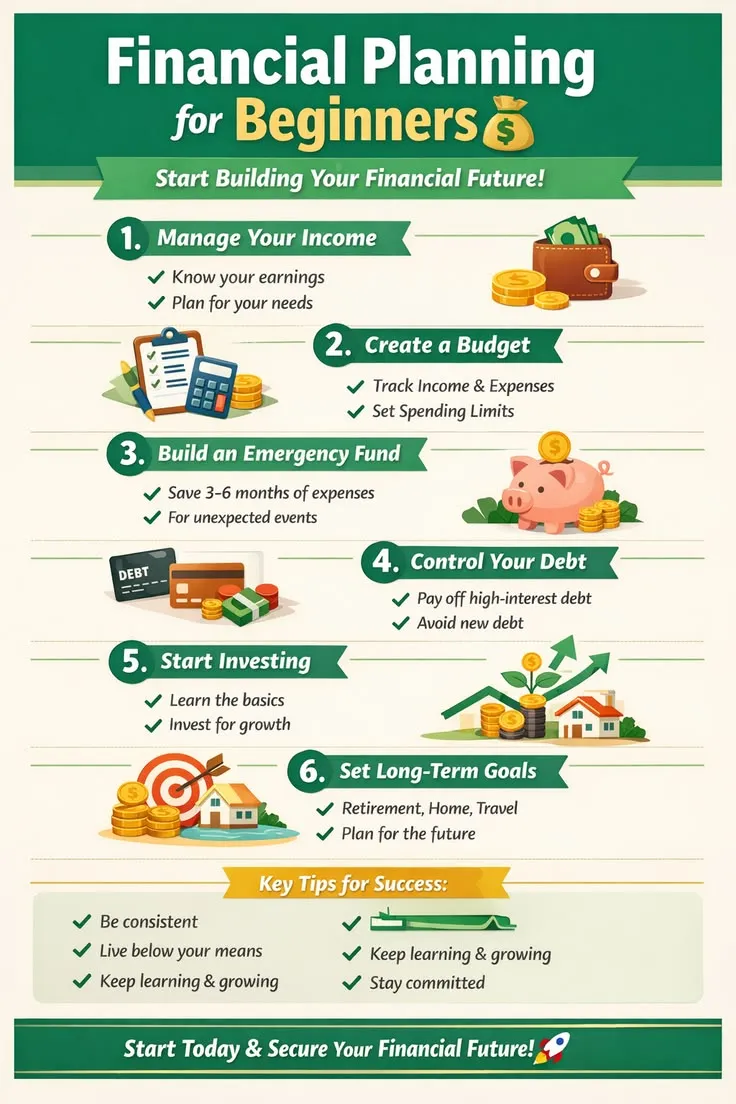
Financial planning is a powerful tool that helps individuals take control of their money and build a secure future. By understanding current finances, setting clear goals, creating a budget, saving regularly, managing debt, investing wisely, and preparing for future needs, anyone can improve their financial situation.
For beginners, the most important step is simply getting started. Small and consistent financial decisions can create significant results over time.
A successful financial journey does not depend only on how much money you earn but on how effectively you manage and plan your resources. With discipline, awareness, and proper strategies, financial planning can help create long-term stability and confidence.