
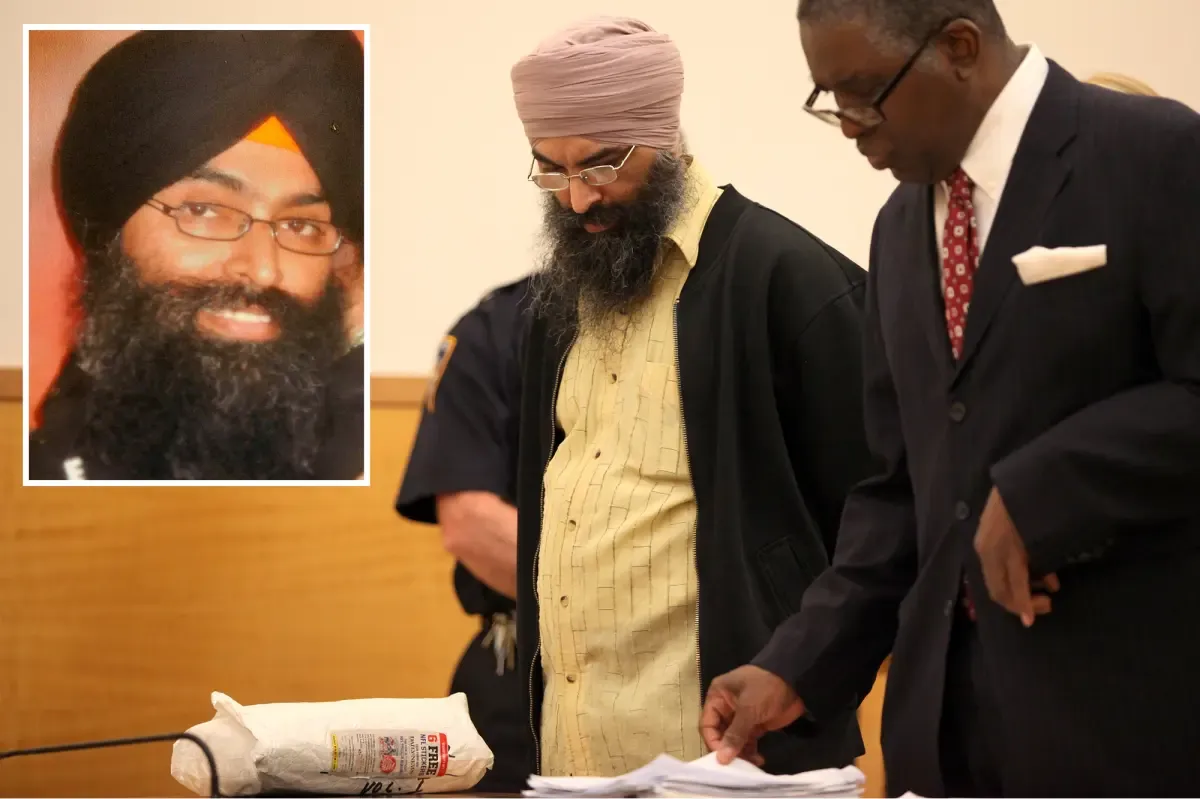
A federal court in New York has revoked the United States citizenship of Gurmeet Singh, an India-born man convicted of raping a passenger at knifepoint in 2011. The U.S. District Court for the Eastern District of New York entered the judgment on August 26, ordering him to surrender the citizenship he obtained by concealing the crime during his naturalization process. The Department of Justice announced the decision, describing it as part of efforts to address fraudulently obtained citizenship.
Background and Path to Citizenship
Gurmeet Singh, now 55, entered the United States in February 1992 as a visitor for a temporary period not to exceed six months. He remained in the country without authorization for years. In June 2000, a family-based immigrant visa petition allowed him to become a lawful permanent resident.
By 2011, Singh was working as a taxicab driver in New York. In May of that year, weeks before he filed his application for naturalization, he committed the crime that later formed the basis for the denaturalization action. According to court records and Department of Justice statements, he picked up a female passenger who fell asleep during the ride. He drove her to a location without witnesses. When she awoke, she found him on top of her with a knife against her throat. He threatened her, bound and gagged her, blindfolded her, removed her clothes, and raped her. The victim eventually escaped from the cab and sought help from a passerby at dawn.
Singh did not disclose these acts during the naturalization process. He became a U.S. citizen on October 19, 2011.
Criminal Conviction
After obtaining citizenship, Singh was prosecuted in New York state court. In 2014, a jury convicted him of Rape in the First Degree and Kidnapping in the Second Degree as a Sexually Motivated Felony. He was sentenced to 20 years in prison. He is currently serving that sentence at a correctional facility in New York.
The Denaturalization Case
Under U.S. law, naturalized citizenship may be revoked if it was illegally procured or obtained through concealment of a material fact or willful misrepresentation. The Department of Justice filed a civil complaint in February seeking to revoke Singh’s naturalization on these grounds. The government argued that he concealed the kidnapping and rape while applying for citizenship and during the related proceedings.
On August 26, the federal court entered judgment revoking his naturalization. The order requires him to surrender his certificate of naturalization and U.S. passport by a specified deadline. Attorney General statements accompanying the announcement stressed that American citizenship is not a shield for criminals and that fraudulently obtained citizenship will not protect individuals from accountability.
Legal Framework for Denaturalization
Denaturalization is a civil process available only against individuals who acquired citizenship through naturalization, not those who obtained it by birth in the United States. The Immigration and Nationality Act provides the statutory basis. Courts examine whether the applicant met the requirements of good moral character during the relevant statutory period and whether material facts were concealed or misrepresented.
In Singh’s case, the crime occurred shortly before he filed the naturalization application and fell within the period during which good moral character is assessed. By failing to disclose the conduct, he obtained citizenship under false pretenses, according to the government’s successful argument.
Broader Context of Enforcement
The case forms part of a wider focus on denaturalization actions against individuals who concealed serious criminal conduct. Officials have indicated an intention to pursue such referrals efficiently. While denaturalization does not automatically result in immediate removal, it restores the individual to the status held prior to naturalization and can open the path to further immigration proceedings, including potential deportation after completion of a criminal sentence.
Singh’s situation illustrates how criminal convictions that occur around the time of naturalization, when concealed, can later serve as grounds for revocation even years afterward. The 15-year gap between the crime and the final denaturalization order reflects the time required for criminal prosecution, conviction, sentencing, and the subsequent civil denaturalization litigation.
Impact and Implications
For the victim, the original criminal case provided accountability through conviction and a lengthy prison sentence. The denaturalization action addresses a separate legal issue: the integrity of the naturalization process itself. By revoking citizenship obtained through concealment of a violent crime, the court reinforced the principle that eligibility requirements, including good moral character, must be met honestly.
The case also highlights the long-term consequences of immigration fraud involving serious offenses. Individuals who naturalize while withholding material information about criminal acts remain subject to later civil action by the government. Once citizenship is revoked, the person loses the protections and privileges associated with it.
Current Status
Gurmeet Singh remains incarcerated serving his 20-year sentence. Following the August 26 judgment, he is required to surrender his naturalization documents. The revocation means he is no longer a U.S. citizen. Any further immigration consequences will depend on subsequent proceedings after he completes his criminal sentence.
The Department of Justice has presented the outcome as confirmation that citizenship obtained by concealing serious crimes can be undone through the courts. The case of Gurmeet Singh stands as a clear example of that process being carried through to judgment.
Read more – themenuspark.com , scorematchup.com