
On a historic night in Bengaluru, India produced one of their most encouraging performances in recent memory. The Blue Tigers held World Cup participant Panama to a 1-1 draw at the Sree Kanteerava Stadium, matching a side ranked nearly 100 places above them for intensity and organisation. Ryan Williams gave the hosts the lead before half-time, only for Omar Valencia to equalise with a spectacular long-range strike. Despite a sparse crowd, Khalid Jamil’s team refused to be overawed and even threatened to claim a famous victory.
A First Meeting with Clear Context
This was the first senior men’s international between India and Panama. The visitors arrived with the prestige of having competed at the 2026 FIFA World Cup and a FIFA ranking around 44th. India, ranked near 138th, entered the match as clear underdogs. The gap in pedigree and recent competitive experience was substantial. Yet from the opening exchanges it was evident that the home side had prepared with purpose and belief.
Jamil set his team up to stay compact, deny space between the lines and strike on the counter. The approach limited Panama’s ability to turn possession into clear-cut chances for long periods and allowed India to play with structure rather than pure survival instinct.
Williams Delivers the Breakthrough
India’s best moments in the first half came from quick transitions and intelligent movement. The decisive one arrived in the 41st minute. A well-worked sequence involving Akash Mishra and Bijoy Varghese released Williams behind the Panama defence. The forward, an Australian-born player of Indian descent who has become an important attacking option for the national team, timed his run perfectly, stayed composed, and finished calmly past the advancing goalkeeper.
The goal transformed the atmosphere inside the stadium. What had been a cautious, probing contest suddenly carried genuine possibility. India went into the interval leading a World Cup side, a rare and uplifting position for the Blue Tigers in recent years.
Panama Respond After the Break
As expected, Panama increased their tempo after half-time. Substitutions brought fresh energy and greater urgency. Gurpreet Singh Sandhu was called upon to make important saves as the visitors began to find pockets of space. The equaliser, when it came in the 68th minute, was a moment of individual quality. Omar Valencia, introduced from the bench, collected the ball outside the area and unleashed a dipping, powerful shot that flew into the net beyond Sandhu’s reach.
Many teams in India’s position might have folded after conceding such a spectacular goal against superior opposition. Instead, the Blue Tigers regained their shape quickly. They continued to contest second balls, maintained defensive discipline, and looked for opportunities to break forward. In the closing stages India created several promising situations, with players such as Manvir Singh, Edmund Lalrindika and others involved in attacking moves that kept Panama honest until the final whistle.
Intensity Over Reputation
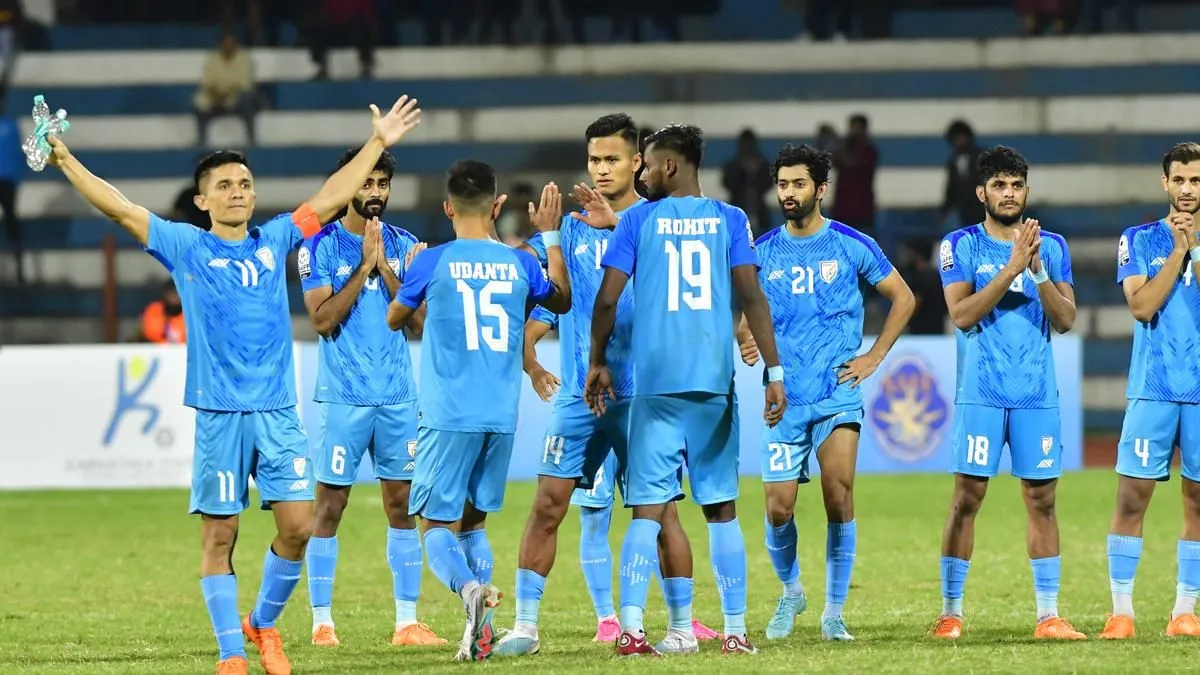
What stood out most was the collective intensity. India did not merely sit deep and hope. They pressed selectively, recovered quickly when possession was lost, and showed the willingness to play forward when opportunities arose. The midfield worked tirelessly to disrupt Panama’s rhythm, while the back line, marshalled with experience, limited the number of high-quality chances the visitors could create from open play.
For a side that has endured difficult results and questions about direction, the performance offered tangible evidence of progress under Jamil. Matching a higher-ranked opponent for large spells and taking the lead against them is not something that can be manufactured overnight. It reflected organisation, fitness and a growing confidence in the game plan.
The Crowd and the Occasion
The stands were not full. Empty patches were visible, a reminder that consistent on-field success is still needed to rebuild the connection between the national team and supporters. Those who did attend, however, witnessed a competitive, honest display that deserved appreciation. The goal by Williams produced a genuine roar, and the team’s refusal to drop intensity after the equaliser earned respect.
Friendlies against higher-ranked sides are valuable precisely because they expose the team to different levels of technical quality, physicality and tactical organisation. India used the occasion well. They competed, learned, and emerged with a result that can be built upon.
Looking Ahead to Sterner Tests
The draw provides useful momentum as India prepare for even bigger challenges. The Blue Tigers are scheduled to face Brazil on October 3 in Kolkata, followed by Uruguay three days later. Those matches will present a significant step up in quality and will test the squad’s ability to recover and adapt quickly.
The Panama result will not change the fundamental realities of Indian football overnight. Ranking gaps, infrastructure questions and the need for deeper competitive consistency remain. Yet nights like this matter. They remind players that they can compete when organised and committed. They give the coaching staff concrete material to analyse and refine. And they offer supporters a reason to believe that incremental progress is possible.
A Night of Character
Ryan Williams’ goal will be remembered as the highlight for India. Valencia’s strike was a reminder of the individual quality Panama could call upon. Between those two moments lay a performance defined by collective effort. India did not simply survive against a World Cup participant. They matched them for large periods, led them, and finished the match still looking capable of winning it.
In the broader context of a rebuilding phase, that constitutes a significant positive. Khalid Jamil’s side left the pitch with a hard-earned point and, more importantly, with evidence that their approach can trouble higher-ranked opposition. For Indian football, such evenings are both rare and necessary. This was one of them.
Read more – Dailymarathishayari.com