
India and the United States appear to have reached a difficult stage in their long-running bilateral trade negotiations. Finance Minister Nirmala Sitharaman stated on Monday that the talks have hit a plateau beyond which further concessions from either side could prove very difficult. Her assessment comes shortly after the United States Trade Representative indicated that a final agreement is not imminent.
Current Status of the Negotiations
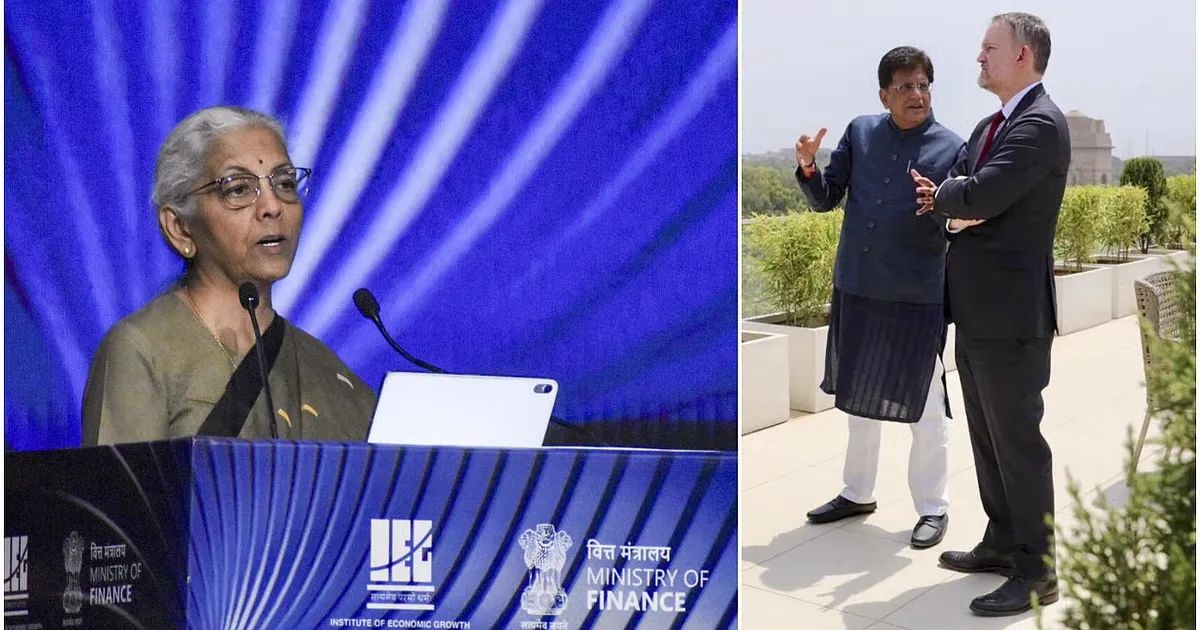
Speaking at the Munich Security Conference in New Delhi, Sitharaman described the proposed agreement as hard and rigorously negotiated. She noted that discussions remain ongoing but that both sides seem to have reached a point where additional give-and-take may be extremely constrained. At the same time, she left open the possibility of limited further movement if both countries identify remaining areas of flexibility.
The predominant feature of India-US trade relations, she observed, is that the balance of trade currently favours India. From the American perspective, reducing this imbalance remains a central objective. Sitharaman linked this dynamic to a broader shift in global trade practice, noting that tariffs, once primarily instruments of negotiation within an established framework, have increasingly been used as tools to address perceived imbalances outside traditional bargaining processes.
Recent Signals from the American Side
Days earlier, United States Trade Representative Jamieson Greer stated that signing a deal is not imminent. He explained that both countries have identified a universe of items that constitute sticking points and are working diligently to resolve them. Greer characterised the negotiations as being in their final phase yet cautioned against expectations of an immediate announcement.
Commerce and Industry Minister Piyush Goyal has been in the United States since 29 September. His visit includes participation in the G20 Trade Ministers’ meeting and bilateral discussions aimed at advancing the trade agreement. The Indian side has consistently emphasised the need for a balanced and mutually beneficial outcome that provides Indian exporters with a competitive position relative to other suppliers in the American market.
Broader Context of the Talks
Negotiations for a bilateral trade agreement have been under way for an extended period. In February 2026 the two governments announced a framework for an interim deal. Subsequent changes in the United States tariff landscape required further discussions, preventing finalisation within the originally anticipated timeframe.
A significant external factor has been the Lindsey O. Graham Sanctioning Russia and Iran Act of 2026. The legislation grants the US President authority to impose tariffs of up to 100 per cent on countries that continue substantial purchases of Russian oil and gas. India remains among the nations potentially affected. This development has added complexity to the trade discussions and introduced an additional layer of uncertainty into the bilateral economic relationship.
Nature of the Remaining Differences
Public statements from both sides indicate that the outstanding issues are multiple rather than singular. Market access, tariff treatment, and the overall balance of concessions form part of the discussion. India has stressed the importance of securing terms that offer a comparative advantage for its exports. The United States has focused on narrowing its trade deficit and ensuring reciprocal openings in areas of commercial interest.
Sitharaman’s remarks suggest that the easy areas of compromise have largely been exhausted. What remains involves more sensitive sectors or principles on which neither side finds further movement straightforward. The finance minister’s characterisation of a plateau reflects the reality that both governments must now weigh domestic economic and political considerations carefully before agreeing to additional adjustments.
Implications for Bilateral Economic Ties
Despite the current difficulties, both countries continue to describe the negotiations as constructive. Officials have repeatedly affirmed the strategic importance of stronger economic engagement. The volume of bilateral trade and the depth of commercial linkages mean that an eventual agreement, if achieved on balanced terms, would carry significant weight for businesses on both sides.
At the same time, the absence of an imminent deal underscores the complexity of modern trade negotiations between major economies. Issues that once might have been resolved through conventional bargaining now intersect with geopolitical considerations, energy security, and domestic industrial policy. The weaponisation of tariffs, as described by Sitharaman, illustrates how trade tools are increasingly deployed in service of broader strategic objectives.
Path Forward
Sitharaman indicated that if space remains for further discussion, both sides could still explore it. Greer’s comments similarly reflect a willingness to continue working through the identified sticking points. Commerce Minister Goyal’s presence in the United States provides an opportunity for direct engagement at the political level.
Whether the remaining differences can be bridged in the near term remains uncertain. What is clear is that both governments recognise the value of a stable and predictable trading relationship. The challenge lies in translating that recognition into concrete concessions that each side can defend domestically.
For now, the India-US trade talks stand at an inflection point. The rigorous negotiation process has narrowed the range of unresolved issues, yet the final steps appear more demanding than earlier phases. How the two sides navigate this plateau will determine whether a comprehensive agreement emerges in the coming months or whether the process extends further into a period of managed differences and continued dialogue.
Read more – wardrobeoops.com