
Japan is making careful preparations for a landmark cricket occasion. On September 22, the country will host its first bilateral men’s T20 International against India at the Sano International Cricket Ground, roughly 100 kilometres from Tokyo. The one-off match forms part of celebrations marking 75 years of diplomatic relations between the two nations and carries wider sporting and diplomatic significance.
A Symbolic Beginning Turns Concrete
Earlier in the year, External Affairs Minister S. Jaishankar and his Japanese counterpart exchanged cricketing gifts. The Japanese side presented the national team’s pink jersey, while the Indian minister offered a bat signed by players. That exchange now appears as an early signal of deeper engagement. The fixture itself is the opening event under the Sport 75 initiative, which emerged from discussions between the Indian and Japanese prime ministers. The broader aim is to strengthen people-to-people ties through sport while supporting long-term cooperation, including India’s interest in hosting the Olympic and Paralympic Games in 2036.
For cricket, the contest carries historic weight. It is the first time the two senior men’s teams will meet in any international format. India, the reigning T20 World Cup champions and the top-ranked side, will be led by Shreyas Iyer. Japan will be captained by Kendel Kadowaki-Fleming, the team’s leading run-scorer and a central figure in its recent development.
Building the Stage at Sano
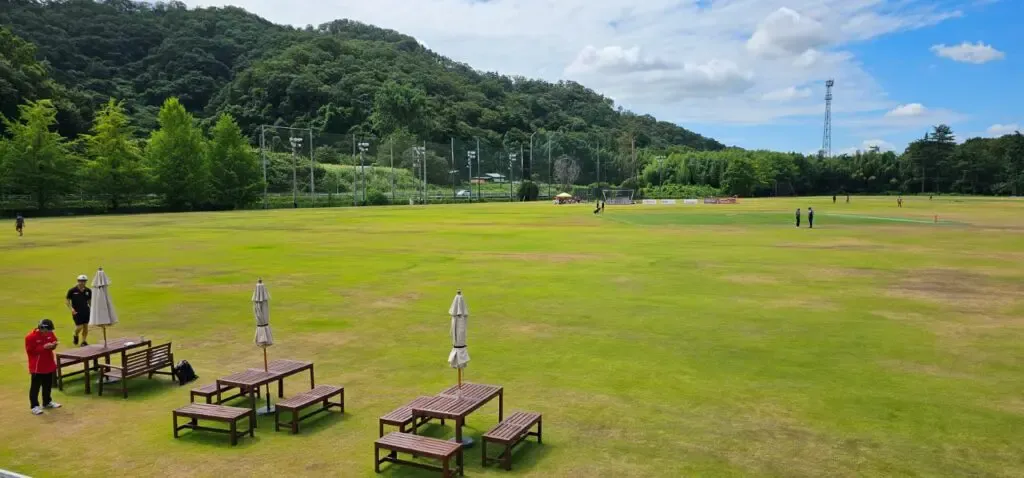
The Sano International Cricket Ground has long been the spiritual home of Japanese cricket. To accommodate expected interest, organisers expanded its spectator capacity from around 500 to approximately 2,000. Tickets went on sale weeks in advance and sold rapidly, reflecting both the draw of the Indian team and growing local curiosity. Japan Cricket Association officials have noted strong early demand, including from the Indian community living in and around Tokyo as well as Japanese fans discovering the sport.
The match will be contested for the Suzuki Cup. Suzuki’s involvement as title sponsor is particularly fitting given the company’s long commercial presence in India. Other major organisations, including leading Japanese and Indian financial and technology firms, have also shown interest in supporting the occasion, signalling wider corporate recognition of the event’s value.
Sri Lanka’s Practical Contribution
One of the more understated yet important elements of the preparation has been technical assistance on the playing surface. Concerned about delivering a reliable pitch for a high-profile contest, the Japan Cricket Association turned to Sri Lanka Cricket. Sri Lankan groundsmen and specialised clay were provided not only for the Sano ground but also for the venue in Nisshin that will host cricket at the Asian Games.
This collaboration ensures consistency between the practice and match facilities available to teams. By advancing the re-laying of the Sano pitches and aligning materials with those used for the Games, organisers have sought to give visiting sides familiar and fair conditions. The arrangement illustrates how associate nations often rely on partnerships with more established boards to raise technical standards quickly.
Context Within a Busy Calendar
The September 22 fixture sits within a concentrated period of cricket activity in Japan. The Asian Games cricket competition begins shortly afterwards, with Japan competing in the group stage and India entering at a later knockout phase. For the home side, facing the world champions offers valuable exposure against elite opposition just days before their Games campaign. For India, the match provides an opportunity to adapt to local conditions and fine-tune combinations in a low-pressure environment relative to major tournaments.
Japan has steadily expanded its cricket infrastructure and player base in recent years. While the sport remains far from the mainstream popularity of baseball, the presence of a full-member side on Japanese soil is expected to generate visibility and media attention that domestic competitions alone cannot achieve. Association officials have described the occasion as a landmark that can help introduce cricket to a broader East Asian audience.
Diplomacy Meets Sport Development
The decision to schedule the match as part of the 75th-anniversary commemorations underscores how sport is being used to reinforce bilateral ties. Beyond the single game, the Sport 75 framework points toward sustained exchanges rather than a one-off spectacle. For Japan, hosting India elevates the profile of the national team and the association. For India, taking the side to a new territory aligns with the broader push to globalise the game and support its growth in emerging markets.
Practical challenges remain typical of staging international cricket in a non-traditional venue. Logistics, security for a high-profile visiting squad, and managing an enlarged crowd at a normally modest ground all require careful coordination. Organisers have indicated that additional measures are being put in place to handle the expected influx of spectators.
Looking Beyond a Single Afternoon
While the result on the field will inevitably attract attention, the longer-term value of the fixture may lie in the infrastructure upgrades, technical knowledge transfer, sponsorship relationships and public awareness it generates. The involvement of Sri Lankan expertise on pitches, the expansion of the Sano ground, and the alignment with Asian Games preparations all contribute to a more robust platform for future events.
Cricket’s expansion has often advanced through a combination of diplomatic goodwill, commercial interest and practical cooperation between boards. The India-Japan T20 follows that pattern. A gift exchange earlier in the year has been followed by concrete planning, pitch reconstruction, sponsor engagement and ticket demand that exceeded the venue’s original scale.
On September 22 at Sano, two teams with vastly different rankings and histories will share the same field for the first time. The occasion is framed by 75 years of diplomatic relations, supported by cross-border technical help, and underwritten by corporate partners who see value in the connection. For Japanese cricket, it represents a rare opportunity to host the world champions on home soil. For the wider game, it is another step in taking international cricket to new audiences and new grounds. The preparations underway in the weeks leading up to the match suggest that both the sporting and symbolic dimensions have been taken seriously.
Read more – pokerslive.com