
Passive income attracts many people because it promises earnings that continue with limited ongoing effort. In reality, most passive income streams require meaningful work or investment at the beginning. Once established, however, they can generate money with less day-to-day involvement than traditional employment or active side hustles. For beginners, the key is choosing realistic options that match available skills, time, and capital while understanding the effort required upfront.
What Passive Income Really Means
Passive income refers to earnings derived from enterprises in which a person is not actively involved on a continuous basis. Common examples include investment returns, royalties, rental income, and revenue from digital products that sell repeatedly after creation. The “passive” label can be misleading. Building these income streams almost always demands initial time, learning, or money. The advantage appears later, when the system continues producing revenue with reduced active input.
Sustainable passive income rarely appears overnight. It grows through consistent early effort, smart systems, and patience. Beginners who approach it with realistic expectations and a willingness to learn tend to make better progress than those seeking instant results.
Financial Foundations Before Starting
Before pursuing passive income ideas, it helps to stabilise personal finances. High-interest debt can undermine returns from any new income stream. An emergency fund provides security so that early experiments do not create financial stress. Understanding basic budgeting ensures that money earned is managed effectively rather than spent impulsively.
Clarity about goals also matters. Some people want modest extra monthly income, while others aim for larger long-term wealth building. Different goals suit different strategies. Starting with lower-risk, lower-capital options allows beginners to gain experience before committing larger resources.
Beginner-Friendly Investment Approaches
One accessible route into passive income is through financial instruments. High-yield savings accounts and certificates of deposit offer modest returns with very low risk and almost no ongoing effort. These options work well for parking emergency funds or short-term savings while still earning something.
Dividend-focused investments, such as certain funds that hold shares in established companies, can generate regular income distributions. Beginners often start with broad, low-cost index funds or exchange-traded funds rather than individual stocks. This approach spreads risk and requires minimal active management. Peer-to-peer lending platforms represent another option, though they carry higher risk and require careful evaluation.
All investments involve some level of risk, and past performance does not guarantee future results. Starting small and prioritising education reduces the chance of costly mistakes.
Creating and Selling Digital Products
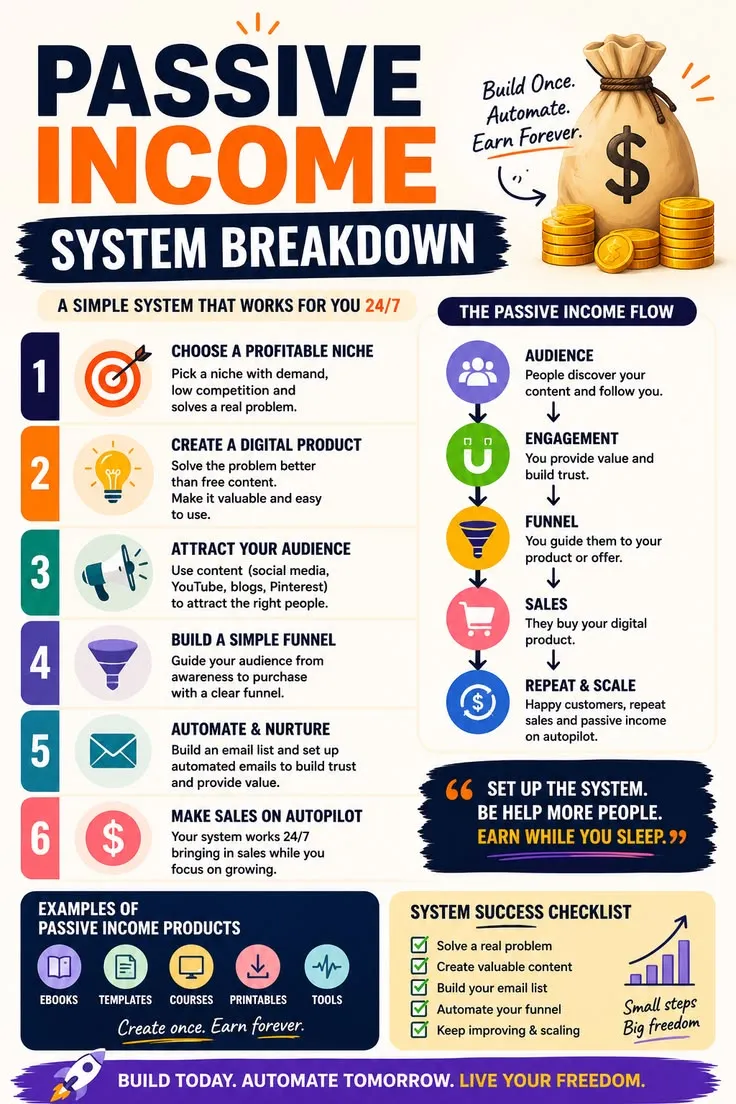
Digital products are among the most popular passive income ideas for beginners with specific knowledge or creative skills. Once created, items such as templates, printables, e-books, online planners, or design assets can be sold repeatedly with little additional work. Platforms exist that handle hosting, payment, and delivery, simplifying the process.
Success depends on identifying a genuine need and creating a quality product that solves a problem or provides clear value. Marketing remains necessary, especially at the beginning. Over time, a well-made product supported by basic ongoing promotion can generate sales with reduced daily involvement.
Online courses follow a similar pattern. Creating educational content requires substantial upfront effort in planning, recording, and structuring lessons. After launch, the course can continue selling while the creator focuses on occasional updates or student support. Expertise in a practical skill or specialised knowledge improves the chances of attracting buyers.
Affiliate Marketing and Content Platforms
Affiliate marketing involves recommending products or services and earning a commission on resulting sales. Beginners often start by creating content—such as a blog, YouTube channel, or social media presence—around a topic they know well. Within that content, they include affiliate links to relevant products.
This method requires consistent content creation and audience building before meaningful income appears. It is rarely passive at the start. However, older content can continue generating commissions long after it is published, creating a more passive element over time. Transparency about affiliate relationships maintains trust with the audience.
Renting Assets You Already Own
Renting underused assets offers a relatively straightforward entry point. A spare room, parking space, storage area, or specialised equipment can generate income through established rental platforms. Some people rent items such as tools, cameras, or sporting equipment.
This approach typically involves lower creation effort than digital products but still requires management, communication with renters, and maintenance of the asset. Clear rules, proper insurance, and realistic pricing help reduce complications. For those with suitable assets, it can provide a practical starting point.
Building Systems That Reduce Ongoing Work
The most sustainable passive income streams include systems that limit continuous effort. Automating delivery of digital products, using scheduled content, outsourcing routine tasks when income allows, or choosing investment vehicles that require minimal intervention all contribute to greater passivity over time.
Documentation and standard processes also help. When the steps for maintaining an income stream are clear, it becomes easier to manage efficiently or eventually delegate parts of the work.
Common Pitfalls to Avoid
Many beginners underestimate the upfront work required and become discouraged when results are slow. Others invest money in opportunities they do not fully understand. Promises of high returns with no effort should be treated with strong scepticism. Scams frequently target people seeking passive income.
Diversification reduces risk. Relying on a single income stream can create vulnerability if that source declines. Starting with one manageable idea, learning from the experience, and then expanding is usually more effective than trying to launch multiple projects simultaneously.
Developing the Right Mindset
Patience and consistency matter more than intensity. Most successful passive income streams grow gradually. Tracking progress, adjusting based on what works, and continuing to learn improve long-term outcomes. Viewing early efforts as education rather than immediate profit helps maintain motivation.
Passive income works best as a complement to other earnings rather than a sudden replacement for active income. Over time, well-built streams can increase financial flexibility and security.
Getting Started in a Practical Way
Begin by assessing skills, interests, available time, and capital. Choose one idea that aligns with those factors. Research the specific steps required, start small, and focus on delivering genuine value. Measure results honestly and refine the approach.
Whether through simple interest-bearing accounts, carefully chosen investments, digital products, content-driven affiliate efforts, or renting assets, beginners have multiple realistic pathways. The common ingredients are initial effort, realistic expectations, and persistent improvement. When approached thoughtfully, passive income can become a meaningful part of a broader financial strategy, providing extra resources and greater long-term stability.
Read more – topstablegames.com